Community Fridges as a Shared Response to Food Waste and Hunger
The creation of a community fridge for food rescue reflects a growing response to two connected challenges faced across the world: excessive food waste and persistent hunger. In many regions, edible food is discarded daily while millions of people struggle to access regular, nutritious meals. This contrast raises ethical, economic, and environmental concerns that extend far beyond households or businesses. Initiatives like community fridges are vital parts of broader efforts to foster community engagement and create resilient local support systems.
Community fridges offer a practical way forward. Built on trust and shared responsibility, they allow surplus food to reach people who need it most. This simple structure supports fairness, care for others, and environmental responsibility, showing how local action can influence wider systems. Much like how a community fridge supports individuals, learning how to establish a community food pantry can further broaden access to essential nutrition within a neighborhood.
At a glance
Community fridges provide open access to surplus food through shared refrigeration units placed in public spaces. They address food waste and food insecurity at the same time by redirecting edible food away from disposal and toward households facing shortages. These initiatives strengthen social bonds while reducing environmental strain linked to wasted food.
Understanding the Community Fridge Model
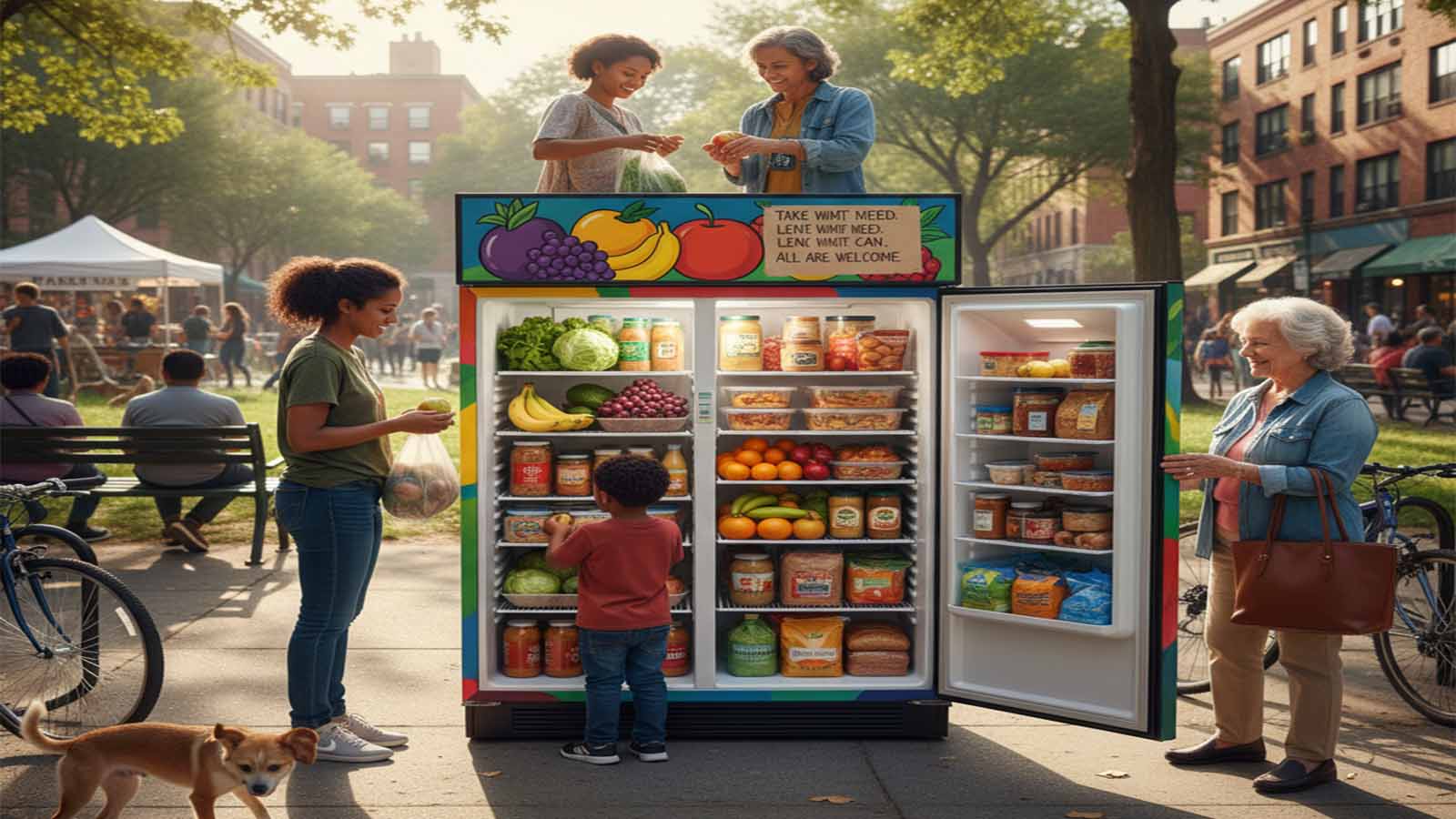
A community fridge is a publicly accessible refrigerator where individuals, farms, food retailers, and eateries can place surplus food. Anyone in need may take items freely, without registration or explanation. The model relies on mutual respect rather than strict oversight, making dignity a central value.
Food placed in these fridges often includes fresh produce, bread, dairy items, and unopened packaged goods that remain safe for consumption. Instead of being discarded, these items gain extended use while supporting neighbors and reducing unnecessary waste.
This approach has been adopted in cities and towns across multiple continents. Its flexibility allows each location to adapt guidelines based on local food safety standards and cultural norms while maintaining the same core purpose.
The Global Scale of Food Waste and Food Insecurity
Across the globe, nearly one third of food produced for human consumption never reaches a plate. Loss occurs during harvesting, storage, transportation, retail handling, and household use. This waste represents a misuse of water, energy, labor, and land.
At the same time, food insecurity affects millions of households. Conflict, economic instability, climate-related events, and rising living costs place reliable access to food beyond reach for many. The impact goes beyond hunger. It affects health, education outcomes, and economic participation.
Population growth adds further strain. As demand increases, inefficient systems amplify pressure on natural resources. Addressing food waste offers one of the clearest opportunities to ease this imbalance without expanding production.
Community fridges respond directly to this gap. Each item saved helps reduce environmental pressure while offering immediate nutritional support within neighborhoods.
How Community Fridges Support Food Rescue
Community fridges function as local redistribution points. Businesses with unsold but safe food can place items into the fridge instead of disposing of them. Individuals may also share excess groceries before spoilage occurs.
Beyond redistribution, these fridges raise awareness. Seeing food shared openly prompts reflection on consumption habits and waste reduction. Over time, communities begin to view surplus not as discardable but as valuable.
Social connection is another benefit. Volunteers who clean, monitor, and restock fridges build trust and cooperation. Shared responsibility fosters stronger local ties and encourages collective care.
Key Benefits for Communities and the Environment
Reduced Food Waste and Environmental Impact
Food waste sent to landfills decomposes and releases methane, a potent greenhouse gas. By redirecting edible food, community fridges help lower emissions while conserving resources already invested in food production.
Reduced waste also eases demand for new production. This lessens strain on water systems, soil quality, and energy use.
Improved Access to Nutritious Food
Community fridges provide immediate access to food without paperwork or judgment. For households facing unstable income or sudden hardship, this access offers meaningful relief.
The open nature of these fridges also removes social barriers. People may use them without fear of stigma, preserving dignity while meeting basic needs.
Economic and Social Value
For food businesses, donating surplus items reduces disposal costs and strengthens relationships within the community. For households, shared food can ease grocery expenses during challenging periods.
Social trust grows as people contribute and benefit collectively. This culture of shared care supports resilience during economic uncertainty or crisis situations.
Learning Through Visibility
Community fridges serve as visible reminders of both abundance and need. They encourage discussion around food systems, safety practices, and waste reduction. Educational signage and volunteer engagement can further support responsible habits.
Steps to Establishing a Community Fridge
Selecting an Accessible Location
Location determines success. A fridge should sit in a visible, well-lit area with steady foot traffic. Proximity to residential zones, public transport, or community facilities improves accessibility.
Access to electricity and protection from weather are essential. Areas with regular human presence help discourage misuse and support safety.
Building a Support Network
Successful fridges rely on people. Volunteers manage cleaning, temperature checks, and food rotation. Partnerships with food retailers, growers, and hospitality venues ensure steady supply.
Local organizations, faith groups, and schools often provide additional support through outreach or funding assistance.
Setting Clear Guidelines
Clear rules protect users. Guidelines outline which foods are accepted and which are not. Raw meat, alcohol, and homemade meals without labels are often restricted.
Visible signage using simple language helps ensure understanding. Consistent standards maintain safety and trust.
Maintaining Food Safety and Cleanliness
Routine cleaning prevents contamination. Temperature monitoring keeps perishable items safe. Volunteers should remove expired or spoiled items promptly.
Basic hygiene supplies placed nearby, such as sanitizer and wipes, support shared responsibility.
Securing Funding and Resources
Initial costs include purchasing the refrigerator, installation, and maintenance supplies. Funding may come from community fundraising, grants, or business sponsorships.
In-kind support, such as donated electricity or equipment, also plays an important role.
Encouraging Ongoing Community Participation
Awareness keeps a fridge active. Information shared through local notice boards, social platforms, and newsletters helps explain how the fridge works and how people can help.
Workshops or informal gatherings allow residents to ask questions and offer ideas. Listening to community feedback supports long-term sustainability.
A sense of shared ownership encourages respect and care. When people feel included, participation remains steady.
Addressing Common Challenges
Issues such as inconsistent donations, misuse, or vandalism can arise. Clear signage and regular volunteer presence help reduce these risks.
Strong relationships with donors ensure steady food flow. Ongoing communication reminds contributors of current needs.
Preparedness and adaptability allow initiatives to respond calmly when challenges appear.
Examples From Communities Worldwide
Community fridges now operate in cities and towns across Europe, North America, Asia, and other regions. In urban neighborhoods, networks of fridges have reduced waste from food retailers while supporting residents facing rising living costs. In smaller towns, volunteer-managed fridges provide steady access for families, older adults, and students. Each setting adapts the model to local needs while maintaining shared principles. These examples show that the idea works across cultures, contributing to global food waste reduction efforts. Each fridge contributes to a broader movement focused on care, responsibility, and shared solutions.
The Strength of Collective Care
Community fridges represent more than refrigeration units. They reflect shared values built through cooperation and respect. By redirecting surplus food, communities reduce waste while supporting neighbors with dignity.
Each fridge strengthens local ties and demonstrates how shared effort can address complex challenges. Through simple, consistent action, communities contribute to a fairer and more sustainable food system that benefits people and the planet alike.