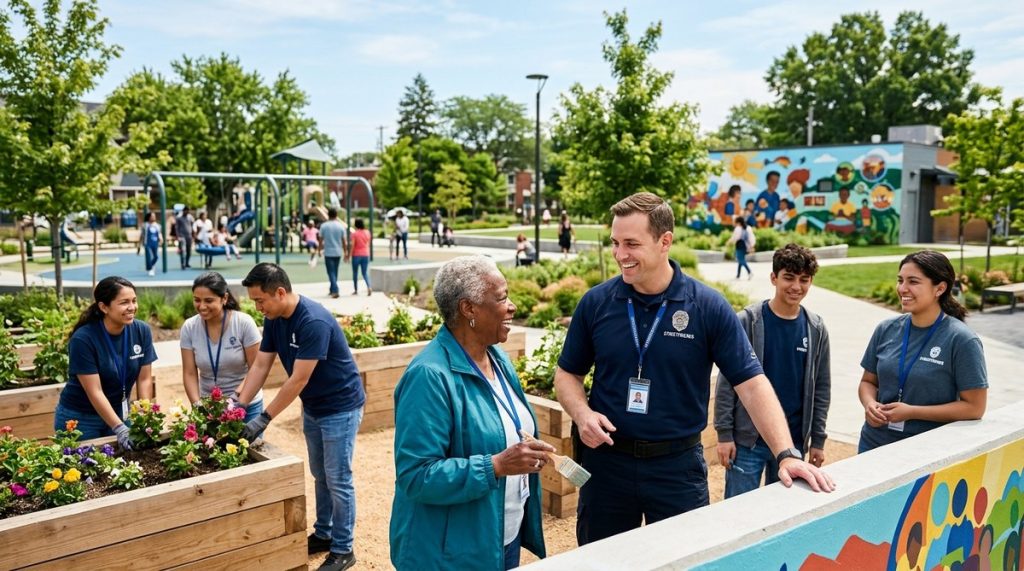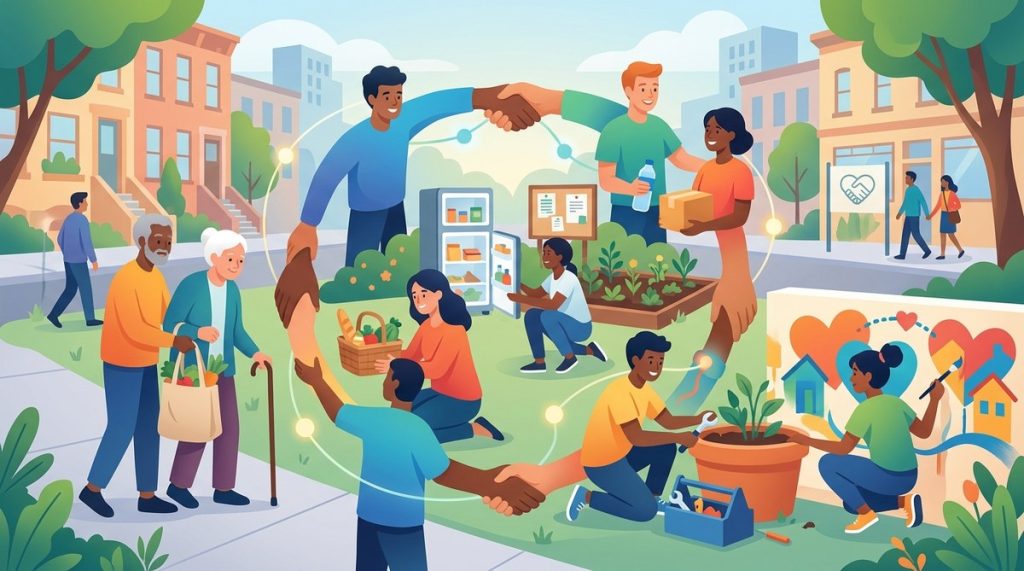
Communities flourish when members feel connected, valued, and supported. A Time Bank offers a practical way to cultivate this environment, allowing individuals to exchange skills and services using time, not money. In a world where financial systems often dictate access to help, this model places equal worth on every person’s hour, challenging conventional economic norms. It creates space for cooperation, trust, and shared responsibility, fostering bonds that transcend cultural boundaries, thereby enhancing overall stronger community engagement.
At its heart, a Time Bank empowers people to give what they can and receive what they need. Imagine a passionate gardener offering expertise to help neighbors grow food. In return, that individual might receive music lessons, language support, or help with household tasks. These exchanges go beyond solving practical problems; they nurture authentic relationships and help restore a profound sense of belonging. For instance, shared skills could include expertise on how to start a community garden, providing tangible benefits to participants.
Quick Overview
- A Time Bank is a community-based system where people exchange services using time credits instead of money.
- Each hour of service earns one time credit, regardless of the skill offered.
- The model supports inclusion, shared learning, and stronger social ties across diverse communities.
Understanding the Time Bank Model
The core philosophy of a Time Bank is simple: every person’s time has equal value. One hour helping another member earns one time credit. This credit can then be used to request assistance from someone else within the network. Whether it’s teaching a skill, providing childcare, home repairs, language practice, or mentorship, every hour carries the same weight. It democratizes giving and receiving.
This approach challenges traditional views of value. In conventional economies, certain specialized skills often command higher rewards, while vital contributions go unrecognized. A Time Bank dismantles that hierarchy. It recognizes that communities thrive when diverse contributions work together. Practical skills, emotional support, and shared knowledge all matter for collective well-being.
Time Banks have taken shape in urban neighborhoods, rural areas, universities, and nonprofit networks. While structures vary, the goal remains clear: strengthen human connections through fair, mutual exchange.
Why Time Banks Matter in a Global Context
Globally, many individuals face barriers to essential services due to limited income, social isolation, or lack of access. A Time Bank addresses these gaps without financial transactions. Time becomes the shared currency, making participation possible for people from all backgrounds.
This system also responds to escalating social challenges. Urbanization, remote work, and digital communication have reshaped how people interact. Many feel disconnected from neighbors. A Time Bank encourages local interaction, demonstrating adaptability to cultural differences across countries.
In disaster recovery, community care, and lifelong learning, time-based exchange has proven its ability to adapt. By focusing on mutual support, it builds resilience and trust where formal systems fall short. It’s a testament to human ingenuity.
Core Values That Guide a Time Bank
A Time Bank’s success is anchored in shared values that shape how members interact.
1. Equal Value of Time
Every hour counts the same. This principle ensures fairness and removes judgment about whose work is “more important.” It empowers individuals to offer their skills confidently, free from comparison.
2. Reciprocity and Shared Responsibility
Both giving and receiving are encouraged. Members fluidly move between roles over time, fostering balance and mutual respect. This reinforces that everyone has something to offer and something to gain.
3. Recognition of Every Individual
Each person brings something meaningful. Whether it’s experience, creativity, patience, effort, or specialized knowledge, all contributions receive acknowledgment and appreciation within the system. This cultivates a culture of celebrating diverse contributions.
4. Community Building
Time Banks aim to strengthen interpersonal relationships, moving beyond mere task completion. Through repeated exchanges, members develop familiarity, forge trust, and cultivate cooperation. It’s about building lasting social fabric.
5. Respect and Inclusion
Participants treat one another with dignity and respect. Age, background, ability, or profession do not determine an individual’s value. This inclusive approach enables diverse groups to work together, creating a welcoming environment.
How Time Banks Strengthen Community Ties
Time Banks create unique opportunities for interaction beyond casual contact. When individuals directly assist one another, they form personal, often profound connections. These interactions often blossom into deeper understanding, robust trust, and enduring relationships that enrich lives.
Consider a retired professional offering mentoring hours to young adults. In return, those young adults might assist with technology or daily errands. Over time, trust blossoms, and the exchange transcends a simple service agreement, transforming into a shared human experience.
Such relationships are crucial for increasing social cohesion. Communities utilizing Time Banks often report stronger neighborly bonds and a heightened willingness to cooperate, especially during challenges. This sense of interconnectedness supports emotional well-being and reduces feelings of isolation, creating a resilient social network.
Benefits of Starting a Time Bank
Launching a Time Bank offers benefits that resonate with individuals and uplift the wider community.
1. Stronger Social Networks
Regular exchanges foster familiarity among members. People learn names, discover strengths, and share stories. These networks often evolve into reliable sources of support during difficulty or crisis. It’s having a safety net woven by human connection.
2. Fair Recognition of Skills
Time Banks highlight abilities traditional financial markets often overlook. Caregiving, creative skills, and informal knowledge receive the same respect as technical services. It democratizes recognition, celebrating every contribution.
3. Personal Growth and Learning
Active membership encourages continuous personal growth and skill acquisition. Members step into new roles, exploring unrecognized talents. Teaching others reinforces confidence and deepens understanding, while receiving guidance opens doors to new abilities. It’s a learning ecosystem.
4. Access Without Financial Pressure
Since money is not a prerequisite, people can access vital support even when facing financial strain. This aspect makes essential services more accessible and reduces reliance on cash-based solutions, creating an equitable system.
Learning and Skill Development Through Time Exchange
Participation in a Time Bank fosters continuous learning and skill enhancement. Members step into new roles. Teaching skills reinforces confidence and deepens understanding, while receiving guidance opens exciting doors to acquiring fresh abilities.
An individual keen on cooking might exchange hours with someone skilled in nutrition. Another might improve foreign language proficiency through engaging conversations. These learning moments occur authentically in real-life settings, making knowledge acquisition practical, memorable, and engaging.
Over time, the community collectively builds a rich pool of knowledge and expertise. This collective growth increases the group’s capacity to respond to evolving needs and challenges, becoming a self-sustaining knowledge hub.
Supporting Others Without Money
One cherished aspect of a Time Bank is its capacity to dismantle financial barriers. Individuals lacking funds can access crucial help simply by offering their time and effort. This innovative approach promotes individual dignity, fosters genuine independence, and cultivates self-worth.
For students, caregivers, older adults, and those navigating career transitions, time-based exchange provides flexibility. It allows people to contribute according to their capacity, respecting circumstances, while receiving support suited to their situation. It’s an adaptive and humane system.
This balance creates a fairer, more compassionate system of mutual aid. It redirects focus from perceived deficits to the abundance of what people can generously share. This shift in perspective positively impacts community spirit and resilience.
Steps to Creating a Time Bank
Establishing a Time Bank demands careful planning, collaboration, and clear communication. It thrives on collective effort.
1. Assess Community Needs and Skills
Start with active listening. Conduct surveys, organize meetings, and initiate informal conversations. These interactions help identify what residents need and what skills they offer. Understanding these patterns is essential for designing a system that fits your community.
2. Form a Dedicated Core Team
Assemble a small, committed group passionate about the vision. This core team guides the project, coordinates activities, supports members, and ensures the system remains organized and responsive. Their enthusiasm is key.
3. Choose a Simple Tracking Method
Time Banks can operate using digital platforms or basic manual record-keeping tools. The chosen system must be easy for members to understand and protect privacy. Simplicity often breeds greater participation.
4. Share the Idea Widely
Transparent communication is vital for building widespread interest and trust. Explaining how the Time Bank functions, sharing inspiring examples from other regions, can powerfully motivate participation. The more people understand, the more likely they are to join.
Adapting the Model Across Cultures
Time Banks succeed when thoughtfully adapted to honor local customs and cultural values. While the core concept remains potent, operational details may flexibly change to suit regional norms, communication styles, and community structures. This adaptability is its strength.
Some communities prefer face-to-face coordination. Others, with digital fluency, embrace sophisticated digital tools for managing exchanges. This flexibility allows the model to flourish while remaining true to its fundamental purpose.
By learning from diverse communities and their adaptations worldwide, Time Banks continue to evolve, demonstrating resilience and proving their enduring relevance. The global reach of the concept of timebanking continues to expand, proving its universal applicability.
A Shared Path Forward
A Time Bank reminds us that meaningful support, connection, and care do not exclusively require financial transactions. By valuing every hour equally, communities strengthen trust, share diverse skills, and care for one another in lasting, sustainable ways. This human-centered approach champions connection, fosters equitable fairness, and cultivates cooperation, wherever people choose to build and nurture it. It’s a vision for a more interconnected future.