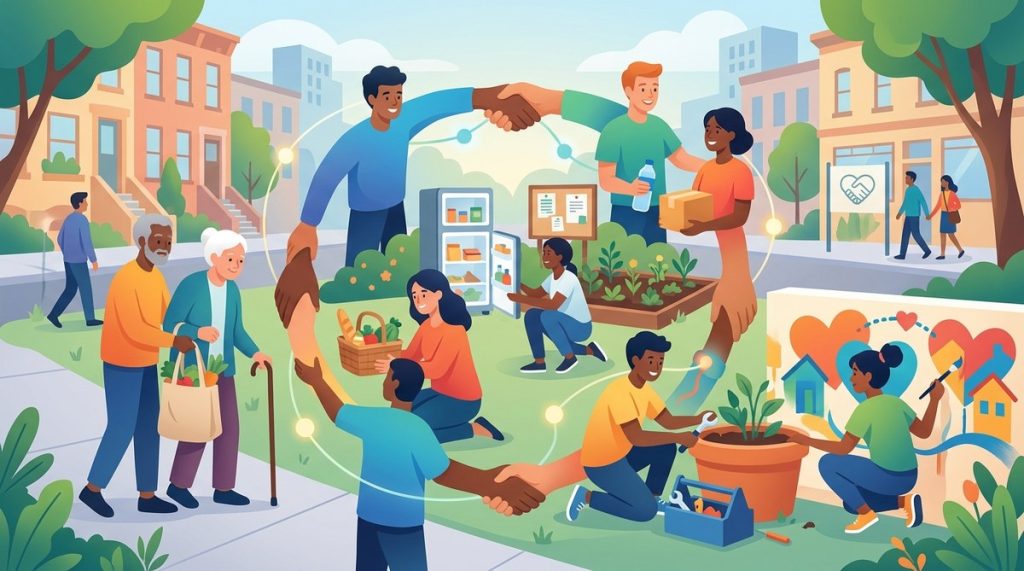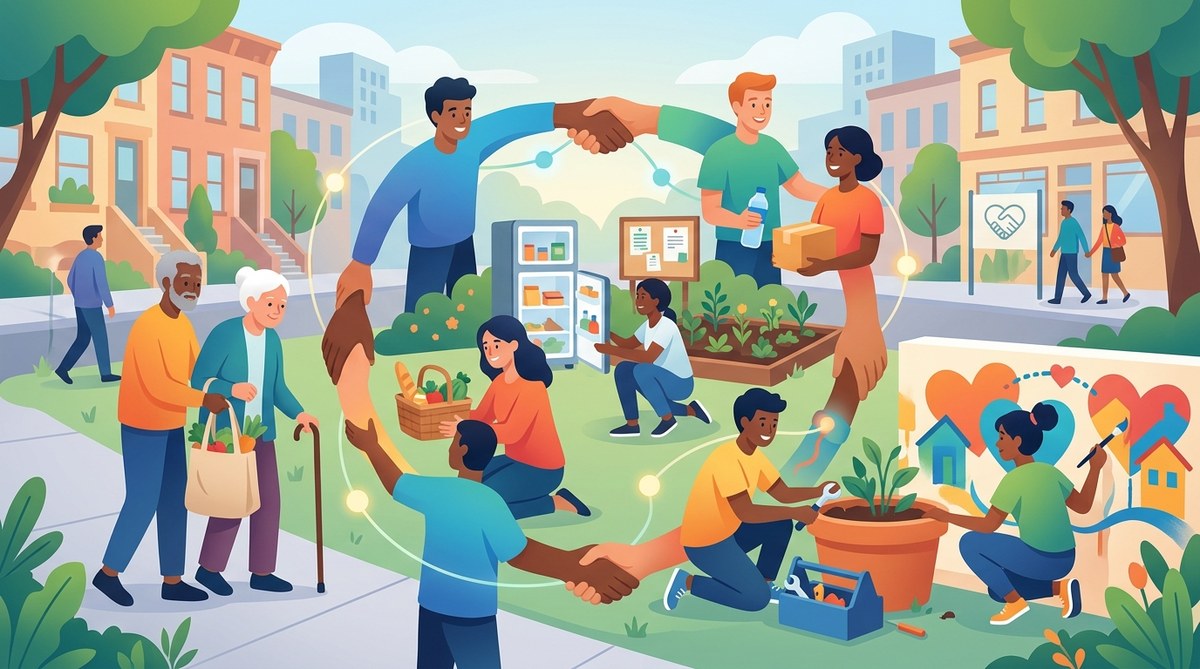
In neighborhoods across the country, a quiet force is growing. It is not about charity from above; it is about people nearby organizing to meet needs, share resources, and lift each other up. This is mutual aid in action. At StreetFriends.org we believe that true community care happens when wellness, learning, and safety tools are built from the ground up with the people who live in the area. When neighbors exchange support, the whole community becomes more resilient, compassionate, and capable of facing challenges together.
What is Mutual Aid and Why It Matters
A quick definition
Mutual aid is a practice in which individuals and groups voluntarily cooperate to meet shared needs. It is grounded in reciprocity, solidarity, and equality. Rather than waiting for institutions to fix every problem, communities organize to identify gaps, coordinate resources, and build lasting relationships.
Principles that guide mutual aid
- Reciprocity over one way giving
- Inclusion and accessibility for all neighbors
- Transparency in decision making and resource use
- Local leadership and shared power
- Safety, accountability, and harm reduction
- Learning from experience and adapting to change
Mutual aid is not a one off donation or a handout. It is a system of care that grows from listening to who is most affected, aligning resources with real needs, and creating neighborhoods where people have a real say in what happens next.
How Mutual Aid Strengthens Community Wellness
Physical safety and access to essentials
Communities thrive when basic needs are met. Mutual aid networks map who has which resources, from food and clothing to child care and transportation. They also create practical channels to distribute those resources quickly and fairly. This could include:
– Neighborhood food drives and pantry networks
– Tool libraries for home repairs
– Shared ride programs for medical appointments
– Emergency prep kits and water storage
– Clothing swaps and household item exchanges
Mental and emotional wellbeing through connection
When people come together to help, it creates social bonds that reduce isolation. Regular check ins, phone trees, and small group gatherings offer spaces where people can share worries, celebrate wins, and practice gratitude. A strong mutual aid network provides:
– Safe spaces to express concerns about health or housing
– Peer support circles for coping with stress or trauma
– Community-led safety planning that reduces fear and violence
– Opportunities for skills building through peer mentoring and workshops
Learning and growth as a community
Mutual aid projects are learning labs. They test ideas, study what works, and adapt quickly. This learning orientation is especially powerful in times of rapid change such as economic stress or public health concerns. Benefits include:
– Practical workshops on budgeting, nutrition, or home safety
– Shared literacy and language access resources
– Youth engagement through mentorship and internship-like experiences
– Civic participation that strengthens democracy at the local level
Practical Steps to Start a Mutual Aid Circle
Starting a mutual aid circle can feel overwhelming, but it becomes manageable with a clear plan and a commitment to inclusive participation. Here is a practical path you can follow.
Step 1: Listen to your neighbors
- Host listening sessions in person or virtually to hear what people need most.
- Create a simple intake form to capture needs and assets in the community.
- Build a feedback loop so participants see how their input shapes the work.
Step 2: Map resources and needs
- Create a living map of available resources (food sources, volunteer time, spaces for meetings).
- Identify gaps where mutual aid can make a difference (transport, childcare, safety gear).
- Assign volunteers to roles that play to their strengths (logistics, outreach, coordination).
Step 3: Create a simple, transparent plan
- Draft a short charter or agreement that explains goals, decision making, and safety norms.
- Establish a small leadership team with rotating members to share power.
- Decide on how you will fund activities (donations, small grants, in kind support).
Step 4: Build trust with ongoing communication
- Use clear channels for updates: a newsletter, a group chat, or a community bulletin board.
- Share timely information about what is happening, who is involved, and how resources are allocated.
- Practice accountability by regularly reviewing progress and adjusting plans as needed.
Step 5: Launch a pilot and evaluate
- Start with a targeted pilot (for example a weekly mutual aid phone line or a monthly supply drive).
- Track impact with simple metrics like needs met, number of participants, and resource efficiency.
- Gather participant feedback and be willing to pivot your approach.
Governance and Sustainability
Shared power and decision making
A strong mutual aid project distributes leadership and power. Consider:
– A democratic process for major decisions, with clear timelines for input and voting
– Rotating roles so many people have a chance to participate
– Regular town hall style meetings to listen to community concerns
Accountability mechanisms
- Set up a simple document of policies on safety, harassment, and inclusion.
- Create a transparent budget with open access to financial records.
- Establish a code of conduct and a process for addressing conflicts respectfully.
Funding and resource management
- Diversify funding streams to avoid overreliance on a single donor.
- Track in kind and monetary contributions with transparent receipts.
- Build partnerships with local businesses, faith groups, schools, and healthcare providers.
Inclusion, Equity and Accessibility
Reaching diverse communities
Mutual aid becomes stronger when it reflects the diversity of the neighborhood. Prioritize outreach to seniors, families, people with disabilities, immigrants, and communities of color. Strategies include:
– Multilingual outreach materials and interpreters at meetings
– Reaching out through trusted community networks and venues
– Flexible meeting times to accommodate work and caregiving schedules
Language access and cultural humility
- Provide translation and interpretation for all major activities.
- Practice cultural humility by inviting feedback about how programs can be more respectful and relevant.
- Ensure materials are culturally relevant and accessible in reading level and design.
Accessibility in space and digital access
- Hold meetings in accessible venues and offer child care during events.
- Provide virtual participation options and ensure platforms are accessible to people with disabilities.
- Supply transportation stipends or arrange rides for those who need them.
Mutual Aid in Action: Real World Examples
- A neighborhood food share that coordinates weekly pickups from local groceries, with a transparent ledger showing donor and recipient names and a rotating volunteer schedule.
- A community safety network that trains volunteers in de escalation, creates a neighbor watch routine, and collaborates with local safety services to reduce harm.
- Learning circles where residents share practical skills such as basic home repair, budgeting, and digital literacy, with guest mentors from nearby colleges or libraries.
StreetFriends.org puts wellness, learning, and safety programs at the center of community care. These elements provide a ready platform for mutual aid projects. By combining practical support with opportunities to learn and feel safe, mutual aid becomes a habit people practice every day rather than a one time event.
How Mutual Aid Connects to Climate Justice and Social Justice
The climate justice link
Mutual aid and climate resilience go hand in hand. Local networks can adapt to climate related impacts with timely support, share sustainable resources, and promote community owned responses. This includes:
– Clean energy education and small scale energy audits
– Localized food systems that reduce transportation emissions
– Shared transportation options that cut down on fuel use
Social justice and inclusion
Communities do not heal in silos. Mutual aid must reflect the principles of dignity, equity, and agency for all participants. When people who are most affected help shape the response, solutions are more likely to meet real needs and endure over time.
Common Misconceptions and Pitfalls
It is not replacing formal services
Mutual aid complements formal services, it does not replace them. Partner with local agencies, clinics, and city services to fill gaps while maintaining community led control over decisions.
Not a quick fix
Mutual aid builds trust and capacity over time. It requires consistent effort, patient listening, and ongoing adaptation.
Avoiding burnout
A common risk is volunteer burnout. Mitigate this by setting sane expectations, rotating duties, and prioritizing care for volunteers as well as neighbors.
Getting Involved: How to Join or Start a Mutual Aid Initiative
If you are reading this, you likely want to participate or start something in your own area. Here are practical paths to get started.
4 entry points to participate
1) Attend a local listening session to understand needs
2) Volunteer with a current mutual aid circle to learn the ropes
3) Offer your skills and time to a project that aligns with your strengths
4) Help with outreach, translation, or administration to widen participation
How to start your own mutual aid circle in 30 days
- Days 1-7: Listen and map. Host listening sessions and draft a needs map.
- Days 8-14: Build a small leadership team and create a simple charter.
- Days 15-21: Launch a pilot activity such as a weekly check in or a resource exchange.
- Days 22-30: Evaluate the pilot, refine processes, and open membership to a broader audience.
StreetFriends.org invites neighbors to join wellness and safety programs that lay a strong foundation for mutual aid based on shared care. By centering inclusive participation and practical support, we help communities become healthier, safer, and more resilient.
The Role of Wellness, Learning and Safety in Mutual Aid
Wellness programs can provide mental and physical health supports that stabilize families and neighborhoods. Learning opportunities build skills for economic mobility and personal empowerment. Safety initiatives reduce fear and create predictable, secure spaces for people to gather and grow. When these three elements are integrated into mutual aid, the impact expands beyond meeting immediate needs. The community gains:
– Skills for better decision making and problem solving
– A culture of care that values every member
– A framework for preventing harm and addressing emergencies calmly
Building a StreetFriends Inspired Mutual Aid Network
If you are inspired by the StreetFriends.org approach, here is a practical blueprint tailored to grassroots mutual aid:
– Start with a small, welcoming meeting space and a clear mission
– Invite diverse voices to participate in planning and governance
– Create a resource ledger that is visible and easy to update
– Establish safety protocols and a conflict resolution process
– Develop a communication plan that keeps everyone informed
– Align with wellness, learning and safety programs to maximize impact
– Measure outcomes not just in numbers but in community well being and trust
Why Now is the Right Moment for Mutual Aid
Recent challenges have shown that top down responses can be slow or mismatched to local needs. Mutual aid flips the script by prioritizing proximity, relevance, and care. It transforms neighbors into active agents of change rather than passive recipients of services. When people know their neighbors, trust grows, and the line between helper and helped becomes a shared journey toward a better future.
A Personal Call to Action
If you are part of StreetFriends.org or a local community group, consider these prompts as you move forward:
– Who are the people most affected by current gaps in services, and how can we involve them in the planning process?
– What resources do we have on hand, and what is missing that we could build together?
– How can we ensure our mutual aid efforts are accessible to everyone in the neighborhood, including those with barriers to participation?
– What learning opportunities can we offer that empower residents to contribute more deeply to the safety and wellness of the community?
Mutual aid is a practical expression of solidarity. It is how neighbors show up for each other in the most tangible ways. It is also a long term investment in the social fabric that holds a community together through good times and hard times alike. By embracing mutual aid as a core practice, StreetFriends.org believes we can create neighborhoods where wellness thrives, learning grows, and safety is built through shared responsibility.
If you want to explore mutual aid within your own community and see examples of how StreetFriends.org puts these ideas into action, start by reaching out to local groups, attending a neighborhood meeting, or joining one of our wellness and safety programs. Together, we can cultivate inclusive communities where every person has access to the support they need and the power to contribute to the common good.