How to Organize a Zero Waste Swap Event for a More Sustainable Future
In our modern world, it’s easy to accumulate items that get used only for a short time before being set aside. A lot of these things are still in perfectly good condition, yet they often end up stored away, gathering dust, or worse, discarded. This habit doesn’t just contribute to growing waste; it also means we’re missing out on chances to share resources effectively and truly strengthen community connections. Think about it: clothes that no longer fit, books you’ve already read, or household items rarely touched, they all still hold value. Giving them a second life can spark significant positive change.
A Zero Waste Swap Event offers a wonderfully simple way to address this issue head-on. It allows people to exchange usable items instead of simply throwing them away. Beyond just reducing waste, it actively encourages practical living and helps build stronger relationships among participants. Each exchanged item plays a part, helping to lower demand for new production, conserve precious energy, and significantly reduce landfill waste.
Quick Overview
A Zero Waste Swap Event is a simple concept: participants bring items they no longer need, and in return, they can pick up items brought by others. No money changes hands; the entire focus is on reuse, saving valuable resources, and actively extending product life.
This clever approach supports a circular system where items stay in use for as long as possible. Plus, it naturally creates opportunities for people to connect, share experiences, and adopt more responsible consumption habits together.
Understanding Zero Waste Swap Events
At its core, a Zero Waste Swap Event operates on a beautifully straightforward idea. People bring items they no longer use but are still in great condition. These items are then made available to others, who can pick up something they genuinely need. Instead of relying on money, the real value lies in the usefulness of the items and the collective effort to reduce waste.
For example, someone might have a collection of clothes that no longer fit. Another person, perhaps, has been actively looking for those exact items. Through a swap, both individuals benefit without any cost. The same principle applies brilliantly to books, children’s toys, or even small household tools that are still perfectly functional.
This type of exchange feels different from simply selling or donating items. It creates a far more engaging and interactive experience for everyone involved. Participants become active contributors rather than passive donors or buyers. This process builds a deeper appreciation for both the items themselves and the people within the community.
Why These Events Matter
Reducing Waste and Environmental Impact
Every single item reused helps slash the volume of waste sent to overflowing landfills. Manufacturing new goods demands raw materials, significant energy, and complex transportation. By purposefully extending the life of existing items, fewer new resources are consumed. This directly reduces pollution and lowers the overall environmental footprint typically associated with production.
Remember, even seemingly small actions can really add up. A single event, for instance, has the power to prevent hundreds of items from ending up in the trash. Over time, these consistent efforts provide substantial support for broader environmental goals.
Strengthening Community Connections
Swap events are fantastic at bringing people together in a genuinely shared activity. Participants interact, exchange stories, and naturally build new relationships. These kinds of interactions truly help foster a sense of belonging and mutual support within a neighborhood.
Imagine a parent exchanging toys with another family. They’re not just solving a practical need; they’re also forging a connection that can easily extend beyond the event itself. These small, positive interactions are what contribute to building stronger and more supportive communities.
Providing Practical Financial Benefits
With rising costs impacting households everywhere, these events become invaluable. Swap events offer a concrete way to access useful items without having to spend any money. Participants can meet their needs while significantly reducing their everyday expenses.
This system brilliantly promotes resourcefulness. Instead of automatically buying new products, individuals learn to make better use of what already exists. It also subtly encourages more thoughtful decision-making when acquiring new items in the future.
Encouraging Responsible Consumption
Participating in a swap event often subtly shifts how people view their belongings. It encourages them to think more carefully about what they buy, what they choose to keep, and what they eventually discard.
Instead of mindlessly following patterns of overconsumption, individuals truly begin to value durability and usefulness. This shift is vital, supporting long-term sustainability and fostering more mindful living habits for everyone.
Planning a Successful Swap Event
Building a Dedicated Team
Behind every successful event is usually a passionate and committed group of volunteers. Each member can take on specific, manageable roles, such as handling communication, managing logistics, or coordinating activities during the event itself.
Setting clear, achievable goals from the outset helps guide the entire planning process. For instance, a team might aim to divert a certain amount of waste from landfills or attract a specific number of participants. These goals provide direction and help you measure your success later on.
Selecting the Right Venue and Time
The chosen location should be both easy to access for your community and spacious enough to comfortably accommodate participants and all the displayed items. Community halls, shared public spaces, or even open-air venues can work wonderfully.
Timing also matters considerably. Weekends, naturally, often see higher attendance because people generally have more free time. Choosing a suitable time dramatically increases both attendance and overall engagement.
Setting Clear Guidelines
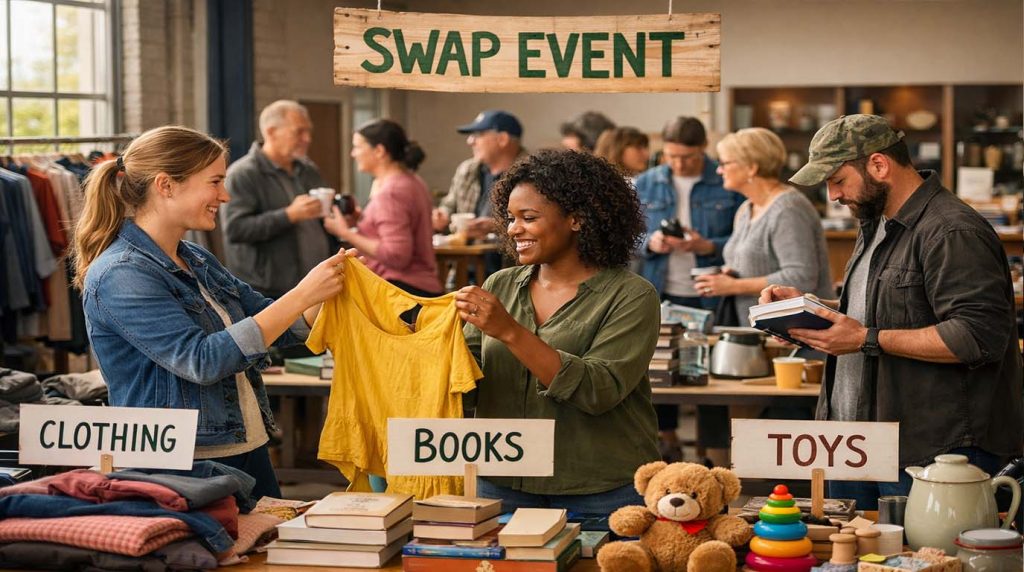
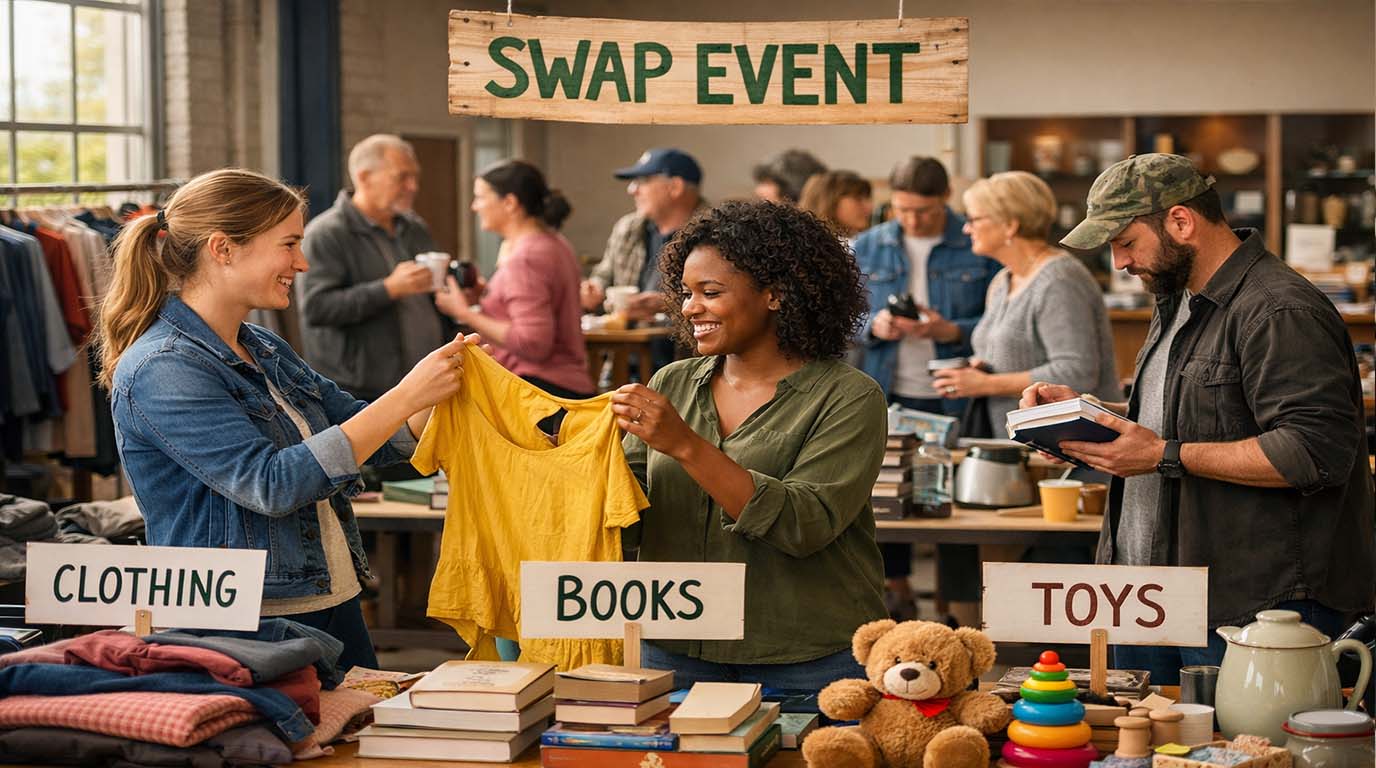
Establishing clear, simple rules is crucial for ensuring fairness and maintaining the quality of items. Generally, items should be clean, functional, and complete. Consider clear categories like clothing, books, children’s toys, and general household items.
Setting sensible limits on the number of items per participant can also help maintain balance and prevent overwhelm. Clear guidelines prevent confusion and ensure a positive, enjoyable experience for everyone involved.
Encouraging Participation
Sharing Information Effectively
Effective promotion is absolutely key to attracting participants to your event. Social media platforms, local community boards, and online neighborhood groups are all excellent channels to spread the word widely.
Your messaging should clearly explain how the event works, but also vividly highlight its many benefits. Simple, direct communication makes it much easier for people to understand and feel motivated to join.
Partnering with Organizations
Teaming up with local schools, non-profit groups, and businesses can significantly expand your reach and resources. These partners might be able to provide space, valuable volunteers, or even additional promotional support.
Working together strengthens the event considerably and boosts its visibility within the community. It also helps build long-term relationships that can support similar initiatives well into the future.
Engaging Volunteers
Volunteers are truly essential for smooth operations on event day. They assist with organizing items, help guide participants, and generally maintain order and a friendly atmosphere.
A brief, clear orientation ensures they understand their roles and feel confident. Friendly and helpful volunteers dramatically improve the overall experience for everyone who attends.
Preparing for Event Day
Organizing the Space
Start by arranging tables and distinct sections based on item categories. Clear, easy-to-read labeling helps participants find exactly what they’re looking for quickly and efficiently.
A well-structured layout improves the flow of people and prevents overcrowding. It also makes the entire event much more enjoyable and easier to navigate for participants.
Managing Item Intake
A dedicated check-in area is vital for organizers to quickly review items before they’re placed on display. This important step ensures that all items meet the established quality guidelines.
Some events use a token system where each brought item corresponds to a token, which can then be exchanged. Others rely on a more open exchange format. Both methods can work effectively if managed properly.
Creating a Welcoming Atmosphere
A comfortable, inviting environment really encourages participants to linger longer and engage more freely. Clean spaces, good lighting, and a calm setting make a significant difference to the overall mood.
Small touches, such as light background music or even simple refreshments, can truly enhance the experience. These thoughtful details help create a positive and memorable event for everyone.
Ensuring Smooth Operations
Clear, concise instructions should be readily available as participants arrive. Volunteers can then guide them through the process and promptly answer any questions they might have.
Maintaining a sense of order throughout the event is incredibly important. Items may need to be reorganized regularly to keep sections tidy and accessible for all.
Once the event concludes, responsibly handling any remaining items is the next crucial step. Donations to local charities or proper recycling ensure that nothing goes to waste, completing the circular journey.
Long-Term Impact and Growth
The positive impact of a swap event extends far beyond just a single day. Tracking key results like participation numbers and the sheer volume of items exchanged provides invaluable insights into its success and potential for growth.
These events can absolutely become regular, cherished activities within your community. Many communities even expand into related, ongoing efforts, such as regular repair workshops or various sharing programs.
Each successful event encourages others to adopt similar practices, helping to build a wider movement towards sustainable living and shared responsibility. Over time, these efforts contribute significantly to circular economy principles, benefiting everyone.
Ultimately, when small, collective actions are taken together, they genuinely lead to meaningful change that profoundly benefits both people and our planet.